Granite-porosity-saturation-test
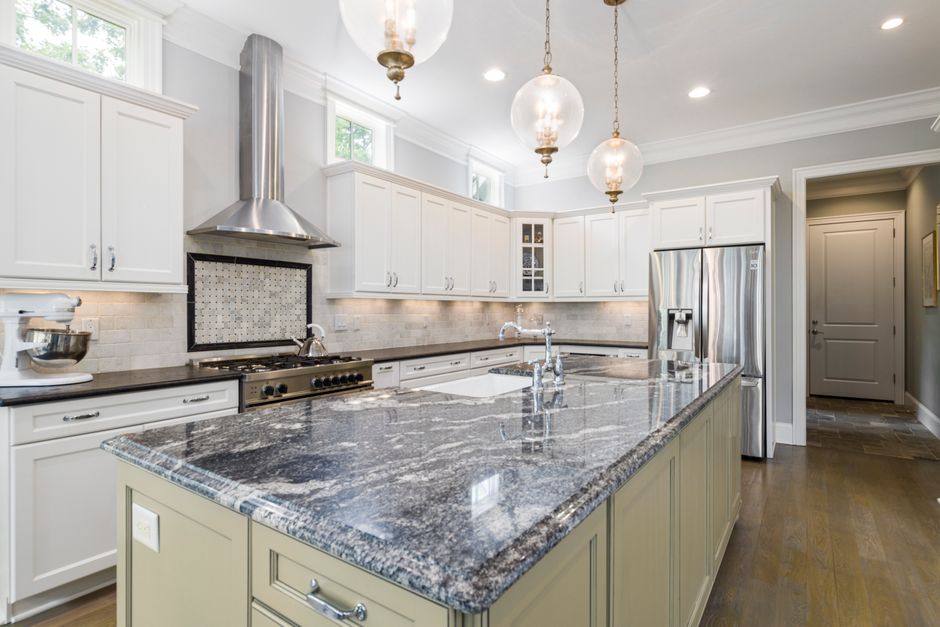
As the final sealant dries on the slab, the observations recorded at custom countertops buncombe county fraiche yogurt differ from standard laboratory figures. A single countertop in Buncombe County, NC requires a specific liquid test to verify how much moisture the stone absorbs before the sealing process begins.
The Droplet Absorption Method
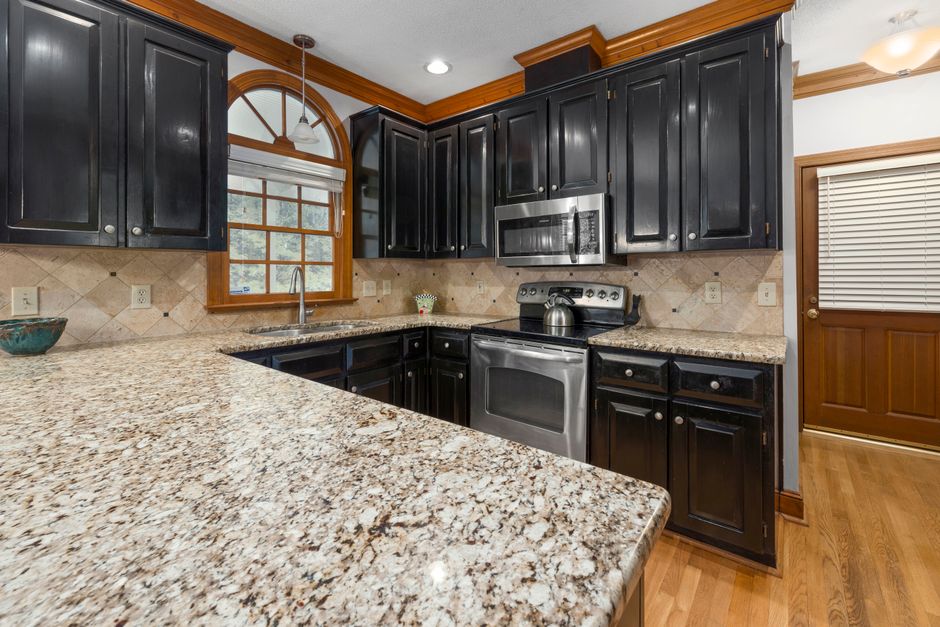
Testing granite requires a controlled environment to avoid false readings. A small volume of water, roughly five milliliters, is placed on a flat section of the stone. The liquid must sit undisturbed for fifteen minutes. If the water penetrates the surface and darkens the granite, the porosity is high. If the bead remains intact, the density is sufficient. This test prevents a situation where a seam appears dark due to moisture trapped during installation. A wet spot near a sink cutout indicates that the stone was not properly sealed or the stone itself is too porous for heavy water contact.
Material Variations and Porosity

Different stones react uniquely to the droplet test. While granite often shows some absorption, quartz remains largely impervious because the resins fill the voids. Marble requires much more frequent testing because the calcium carbonate structure is naturally prone to etching and liquid penetration. Even a small remnant used for a vanity needs this check. A quartzite sample might behave more like granite, requiring a heavy application of sealer. Testing ensures the sealer penetrates the pores rather than just sitting on the surface. If the liquid disappears in under five minutes, the stone is highly porous.
Testing Near the Edge Profile
The edge profile affects how liquid sits on the stone. On an eased edge, the water might run off before the test is complete. A bullnose edge creates a curved surface where gravity pulls the droplet away from the testing zone. For a waterfall edge, the vertical plane must be tested separately from the horizontal slab. If the liquid pools in the curve of a profile, the absorption rate appears higher than the actual flat surface rate. This mechanical reality means testing must occur on the flattest part of the slab to get an accurate measurement of the stone's density.
Seam and Cutout Observations
Water often tracks toward a seam or an undermount sink area. During the templating phase, identifying the density of the stone helps determine how much sealant is needed around these high-moisture zones. A seam placement that sits directly under a faucet requires extra attention to the absorption rate. If the stone around the sink cutout shows immediate darkening during the test, the sealer must be applied more heavily in that specific area to prevent future staining or structural degradation from moisture ingress.